
Views: 126 Author: Site Editor Publish Time: 2026-01-27 Origin: Site


The right clothing for yoga involves choosing high-stretch, moisture-wicking, and breathable Yoga Clothes that offer a full range of motion while maintaining opacity during complex poses. A standard professional kit typically includes high-waisted leggings or flexible shorts and a form-fitting top, all engineered from performance blends like Nylon-Spandex to ensure the practitioner remains comfortable, dry, and focused throughout their session.
Navigating the vast market of athletic apparel can be daunting without a clear understanding of fabric science and ergonomic design. Whether you are sourcing for a boutique studio or upgrading your personal practice wardrobe, selecting the correct Yoga Clothes is a strategic decision that affects physical performance and mental focus. This guide provides a comprehensive breakdown of essential pieces, style-specific requirements, and the long-term care of professional-grade gear.
Why the Right Yoga Clothes Matter
Essential Pieces for a Yoga Wardrobe
What to Wear by Yoga Style
Ready for Your Next Yoga Session?
Caring for Your Yoga Clothes
Final Thoughts
Choosing specialized Yoga Clothes is critical because it ensures the practitioner has unrestricted movement, proper thermoregulation, and the confidence that their apparel will remain opaque and in place during inversions and deep stretches.
Yoga is a discipline defined by extreme ranges of motion. Standard gym wear often fails to meet these demands; for instance, traditional cotton t-shirts absorb sweat and become heavy, while non-specialized leggings can become transparent when the fabric is under tension. Professional Yoga Clothes are engineered with 4-way stretch technology, meaning the fibers can expand and contract in every direction. This allows the practitioner to move from "Downward Dog" to "Warrior II" without the fabric pinching the skin or pulling against the joints.
Thermoregulation is another scientific pillar of quality Yoga Clothes. During an intense flow, the body generates significant heat. High-performance fabrics utilize capillary action to pull moisture away from the skin and transport it to the surface of the garment for rapid evaporation. This "wicking" process is essential for maintaining a stable body temperature and preventing the skin from becoming slippery, which is a major safety concern when holding balance poses on a mat. Without the right Yoga Clothes, an athlete is more likely to overheat or lose their grip.
Furthermore, the psychological aspect of "enclothed cognition" suggests that wearing the appropriate gear enhances mental performance. When a yogi wears Yoga Clothes designed specifically for the craft, they experience fewer distractions. Features such as high-waisted bands provide core awareness and abdominal support, while flatlock stitching prevents the chafing associated with bulky seams. By eliminating physical discomfort, the right Yoga Clothes allow the practitioner to achieve the "flow state" that is central to the yoga experience.
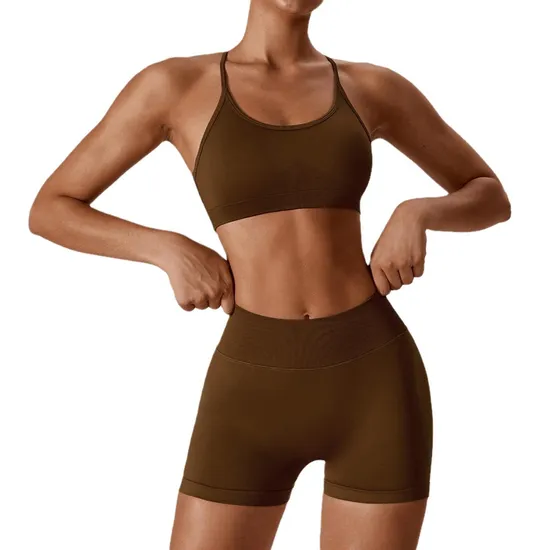
An essential yoga wardrobe is built upon a foundation of versatile Yoga Clothes including high-waisted compression leggings, a supportive sports bra, and a breathable, form-fitting tank top or tee that does not shift during movement.
The centerpiece of any collection of Yoga Clothes is the legging. High-waisted designs have become the industry standard because they provide security and coverage during forward folds and deep lunges. For B2B buyers, it is important to look for Yoga Clothes with a high GSM (grams per square meter) to ensure they are "squat-proof." Additionally, many modern designs incorporate hidden pockets for keys or cards, blending the functionality of traditional Yoga Clothes with the convenience required by modern urban lifestyles.
Upper body Yoga Clothes must balance support with breathability. For women, a medium-impact sports bra paired with a racerback tank top is often the preferred choice, as it allows for full scapular mobility. For men, moisture-wicking tees that are slightly tapered at the waist prevent the shirt from falling over the face during inversions like headstands. The goal of these Yoga Clothes is to remain as unobtrusive as possible, acting as a second skin that facilitates rather than hinders the physical practice.
| Item | Primary Function | Recommended Feature |
| High-Waist Leggings | Support & Coverage | 4-Way Stretch / Interlock Knit |
| Sports Bra | Stabilization | Moisture-Wicking / Seamless |
| Fitted Tank Top | Breathability | Racerback / Lightweight Fabric |
| Yoga Shorts | Airflow (Hot Yoga) | Elasticated Waist / Inner Liner |
| Layering Hoodie | Post-Class Warmth | Anti-Odor / Soft Touch |
Finally, layering is a critical but often overlooked aspect of Yoga Clothes. At the beginning of a class during the "centering" phase, and at the end during "Savasana" (relaxation), the body's temperature can drop quickly. Having a lightweight, breathable wrap or long-sleeved top made from the same technical materials as your primary Yoga Clothes ensures a comfortable transition. These layers should be easy to remove and put on, allowing the practitioner to adjust their microclimate throughout the session without breaking their concentration.
Different yoga styles demand specific adjustments to your Yoga Clothes, ranging from minimalist, high-wicking gear for Hot Yoga to soft, non-restrictive, and layered apparel for Yin or Restorative practices.
In Hot Yoga or Bikram, where the room is heated to over 100 degrees Fahrenheit, your Yoga Clothes must prioritize sweat management above all else. Minimalist gear, such as sports bras and specialized yoga shorts, is often preferred to allow for maximum skin-to-air contact for cooling. In this environment, Yoga Clothes made of thick or absorbent materials like heavy cotton are a liability. Instead, practitioners should opt for ultra-thin, synthetic Yoga Clothes that dry almost as fast as they get wet.
Conversely, Restorative or Yin Yoga involves long holds in passive poses, meaning the body does not generate much heat. For these classes, Yoga Clothes should be softer and more insulating. Many practitioners prefer "brushed" fabrics that feel like a soft peach skin, providing a sense of comfort and coziness during meditation. These Yoga Clothes don't need the same high-level compression as those used for Power Yoga, but they still require enough stretch to accommodate deep, long-duration poses without causing pressure points.
For Vinyasa and Hatha styles, which fall in the middle of the intensity spectrum, versatility is key. The ideal Yoga Clothes for these styles provide enough compression to support muscles during movement but remain breathable enough for the heat generated by a sun salutation. Many professionals recommend a "mix and match" approach to Yoga Clothes, pairing a high-compression bottom with a looser, more ventilated top. By tailoring the Yoga Clothes to the specific intensity and temperature of the class, the practitioner can ensure an optimal experience every time.
Being ready for a yoga session involves verifying that your Yoga Clothes are in peak condition, meaning they have retained their elasticity, are free of persistent odors, and provide the necessary coverage for the specific class you are attending.
Preparation is more than just packing a bag; it is about auditing the technical integrity of your Yoga Clothes. Over time, the elastic fibers (Spandex or Elastane) in performance gear can break down due to heat and sweat. Before your next session, perform a "transparency test" in bright light to ensure your Yoga Clothes still provide full coverage. If the fabric has thinned or lost its "snap," it is time to replace it. For B2B providers, educating customers on when to upgrade their Yoga Clothes is a great way to drive recurring sales while ensuring user satisfaction.
Accessory integration is another part of being "ready." Many practitioners now use grip socks or headbands made from the same materials as their Yoga Clothes. A high-quality headband prevents sweat from stinging the eyes during intense flows, while specialized socks provide traction on rented mats. Integrating these small items into your Yoga Clothes rotation can significantly improve your comfort level, especially in studios where the temperature or floor cleanliness may vary.
Finally, consider the "post-practice" phase. The "Athleisure" trend has made it socially acceptable to wear Yoga Clothes long after the class has ended. However, to do this comfortably, your Yoga Clothes must feature antimicrobial treatments. These silver-ion or chemical-free treatments prevent the growth of odor-causing bacteria. Being ready means knowing that your Yoga Clothes will transition smoothly from the studio to the grocery store or a coffee meeting without compromising your personal hygiene or style.
Proper care for Yoga Clothes involves washing them in cold water with a mild detergent, avoiding fabric softeners that clog performance pores, and air-drying to preserve the integrity of the elastic fibers.
The very features that make high-end Yoga Clothes so effective—their breathability and stretch—also make them susceptible to damage in a standard laundry cycle. Fabric softeners are particularly damaging; they work by coating fibers in a waxy substance that softens the feel but simultaneously seals the "breathable" pores of the fabric. This prevents the Yoga Clothes from wicking moisture in the future, effectively turning a high-tech garment into a non-functional piece of plastic. To maintain your Yoga Clothes, always use a detergent specifically formulated for synthetics.
Heat is the second major enemy of Yoga Clothes. The high temperatures of a standard dryer can "melt" the microscopic elastic threads that provide compression and stretch. This results in the "baggy knees" syndrome often seen in low-quality gear. To extend the life of your Yoga Clothes, always hang-dry them. Most synthetic Yoga Clothes are designed to dry quickly anyway, so air-drying is both environmentally friendly and the best way to protect your investment.
Wash Temperature: Cold (30°C or below)
Detergent: Mild, liquid, no bleach
Softener: Never use
Drying: Air dry only (Hang or flat)
Ironing: Avoid (Heat damages synthetics)
Furthermore, it is recommended to wash your Yoga Clothes inside out. This prevents the outer finish of the leggings or tops from pilling due to friction with other garments in the machine. For B2B suppliers, providing clear care instructions with every purchase of Yoga Clothes builds brand trust and ensures that the end-user enjoys the product's performance for its entire intended lifespan. Proper maintenance ensures that the "investment" in quality apparel pays off in long-term durability.
The evolution of Yoga Clothes has turned a simple practice garment into a sophisticated piece of performance technology that supports the practitioner's physical health and mental focus.
As we have explored, selecting the right Yoga Clothes is a blend of understanding fabric science, ergonomic requirements, and personal style. For the modern consumer, these garments are no longer just "activewear"; they are a fundamental part of a health-conscious lifestyle. For the B2B sector, the Yoga Clothes market continues to be a high-growth area where technical innovation—such as sustainable recycled fibers and seamless knitting—is highly rewarded.
Investing in high-quality Yoga Clothes is an investment in the practice itself. By choosing gear that moves with you, breathes with you, and lasts through hundreds of sessions, you are removing the barriers to consistency and progress. As the industry moves toward even more specialized and sustainable solutions, the core principles remain the same: comfort, coverage, and a full range of motion.


